
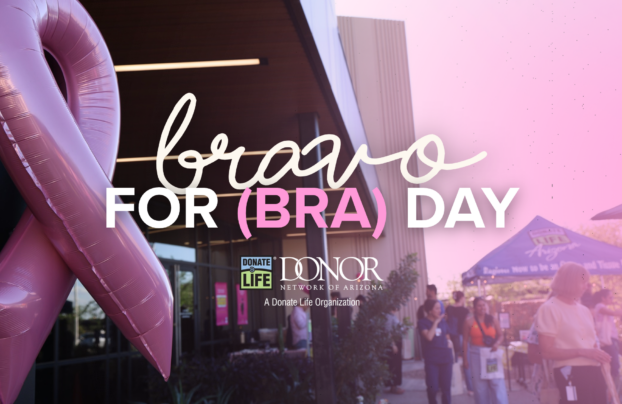
Breast Reconstruction Awareness Day (BRA), is observed each October to make sure every woman facing a mastectomy knows reconstruction is an option and understands the role donated tissue can play in restoring both body and confidence. For many, it’s information that changes how they face the road ahead.
Dr. Mitchell Brown, a Canadian plastic surgeon, started BRA Day in 2011 after noticing a troubling pattern: too many women who underwent a mastectomy were never informed about their reconstructive options. Some assumed reconstruction wasn’t for them; others didn’t know it was a choice they were entitled to explore. He found it unacceptable that patients were navigating one of the most vulnerable moments of their lives in the dark.
In the United States, 13% of the women will develop breast cancer in their lifetime, according to the American Cancer Society. For many of those women, breast reconstruction can be a meaningful step toward healing after a mastectomy, and donated tissue plays a role in making it possible. One tissue donor can help more than five women undergoing breast reconstruction surgery.
The signs
Early detection saves lives, and knowing the signs is the first step. These are some of the signs worth bringing up with a doctor:
- A new lump or thickening in the breast or underarm area
- Change in breast size or shape
- Dimpling or puckering of the skin
To learn more about recognizing the signs, visit the Mayo Clinic’s website.
Celebrating BRA Day
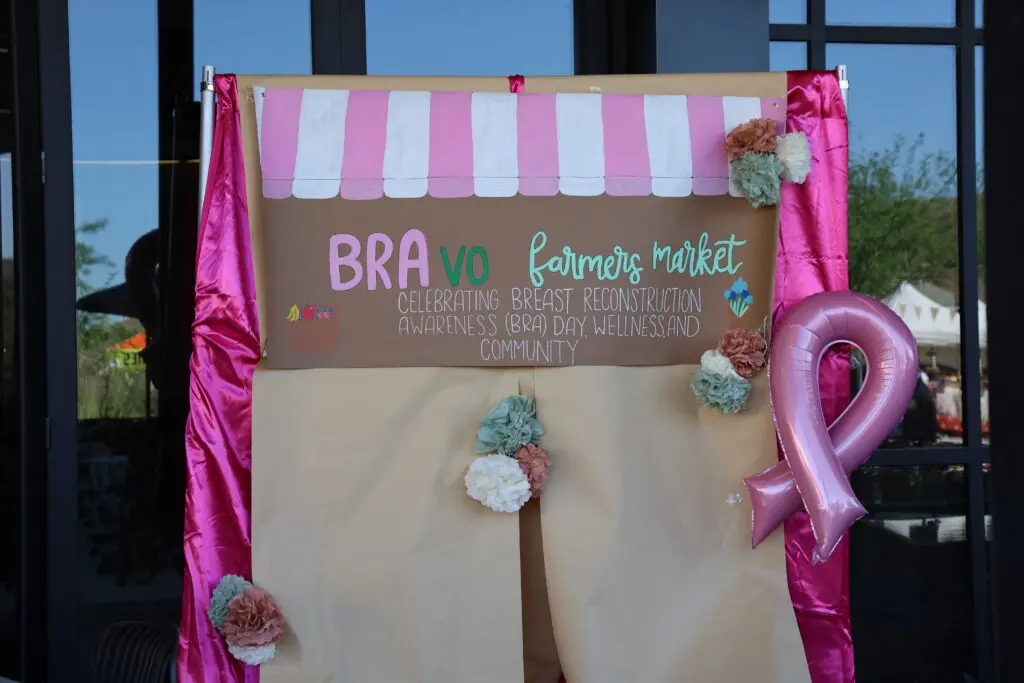 Oct. 21 is Breast Reconstruction Awareness Day! Every year on the third Wednesday in October, we celebrate the strong people who have undergone breast reconstruction surgery. This national observance is designed to promote education, awareness and access to information regarding post-mastectomy breast reconstruction options.
BRAvo for Breast Reconstruction Awareness! Donor Network of Arizona is celebrating with its second annual BRAvo Farmers Market on Wednesday, Oct. 21 from 3-7 p.m. It’s more than about shopping locally. It’s about uplifting and providing hope for breast cancer survivors. On the day before the market, our Tissue Systems Optimization teams hosted an information session on breast cancer prevention, tissue donation’s role in recovery and restoration procedures.
“In moments of unimaginable grief, families aren’t thinking about the medical mechanics — they are simply navigating loss. But because the professionals in this room are thinking about it, we bridge that gap,” says Claire Ward, manager of Tissue Donor Optimization. “We turn profound heartbreak into life-enhancing allografts that make procedures like breast reconstruction possible.”
The impact of this work is monumental. Last year alone, Donor Network of Arizona was entrusted with 858 generous skin tissue donors — each one representing countless lives touched, restored and renewed. We celebrate BRA Day each year to say thank you for the care, dedication and heart our teams bring to this mission every single day.
Events like these are hosted to make sure women and men of all ages have information on breast cancer and know what to look for during a self-examination. BRA Day aims to offer hope in some of the hardest times of their lives.
The Stats
In 2026, the American Cancer Society estimates that 321,910 women will be diagnosed with invasive breast cancer, meaning cancer that has spread beyond the milk ducts into nearby tissue. An additional 2,670 men will be diagnosed with invasive breast cancer, and 530 men are expected to die from the disease.
Many people don’t realize breast cancer can affect men too. Men have breast tissue, and they can develop the disease, though it is far less common. Knowing the signs, like a lump or changes in the nipple or skin, matters for everyone.
About 60,730 people will be diagnosed with ductal carcinoma in situ (DCIS), an early-stage, noninvasive cancer that forms in the lining of a milk duct. Because it hasn’t spread, DCIS is highly treatable, which is why screening and early detection make such a difference.
A tough decision
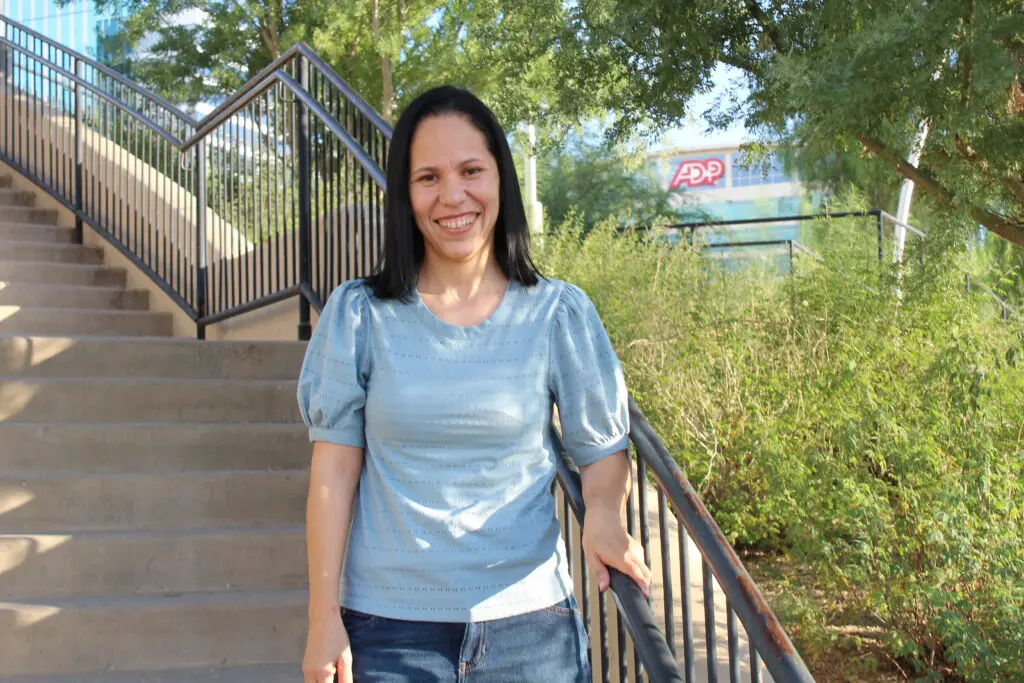 For Delfina Arroyo, that hope is personal. Arroyo has a prominent family history of cancer. Uterine, ovarian, breast, lung and kidney cancers run in her family. Arroyo lost her aunt and brother to cancer. Doctors told Arroyo she was prone to cancer because of a gene mutation.
Arroyo, who is a mother of two, was left in a difficult position. Her choices were to either wait for cancer or have a preventative double mastectomy.
“If I can take care of this with one surgery versus have my kids later on deal with the pain I’ve dealt with, then I’d rather just do it,” Arroyo said.
Healing in body and spirit
Arroyo resumed a healthy life after reconstructive surgery following her mastectomy. Now a tissue recipient, the most important part of all was hugging her children again.
“The look on my daughter’s face every day when I would tell her we can’t cuddle because of my surgery, it would break my heart,” she said.
For women like Arroyo, donation is both a gift given and a gift received, a cycle of healing that connects donors, survivors and the families who say yes in their hardest moments.
Throughout Breast Cancer Awareness Month and in celebration of BRA Day, we hope more people consider registering as donors, so more women can experience that healing.
To register as a tissue donor and give hope, please visit DNAZ.org/register.