
Understand Organ Donation
Donation = Life
Shared life. Ongoing life.
New to it? Or just curious to learn more? This section gives you the answers you need—what’s possible through donation.
What’s Possible?
Tens of thousands of lives saved and healed. That’s what’s possible when Arizonans like you say yes to organ and tissue donation. We can’t deny it—death is part of the equation here. But knowing we all will pass away eventually, what’s key is saying yes to donation.
Without donors, this lifesaving work would not be possible.

Sign Up Now
You can register the next time you get a driver’s license or state ID or right now by signing up here.
Organ Donation
One donor can save up to eight people, giving them a second chance at life. It’s not just a medical act. It’s a miracle in motion for many reasons, including the fact that organ donation can only take place if the donor passes away in a hospital setting, is on a ventilator, and dies either by brain death (no blood flow to the brain nor brain activity) or circulatory death (when the heart completely stops).
The recipients who wait for a transplant have no other recourse to survive long term. When you register, you’re saying, “I want to help others.”
Here’s what a deceased organ donor can offer:
- Heart
- Lungs
- Liver
- Kidneys
- Pancreas
- Small intestine
A donor also offers an additional meaningful way for their loved ones to remember them by. It makes a profound impact on recipients and the donor’s family alike.
A true legacy.
After death is declared, organ recovery takes place in a sterile operating room just like any other surgery. A surgeon and other highly trained medical professionals respect the donor throughout the procedure.
That might include details like reading words of tribute, offering a moment of silence, or even playing the donor’s favorite music during recovery as a way to honor the gifts that a donor offers.
Heartbeat of Hope
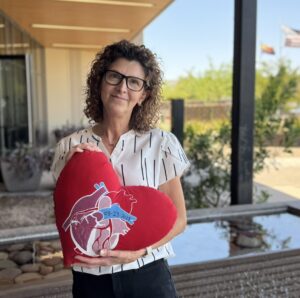
Laura Gober never imagined she would need a heart transplant. A healthy, active woman with no history of high blood pressure or heart disease, she was stunned when sarcoidosis, an autoimmune disorder, attacked her heart.
In just three months, her heart function dropped to 15%, and doctors told her a transplant was her only option. After a month on the waiting list, Laura received her gift of life at Mayo Clinic Phoenix in March 2023.
Complications from a stroke prolonged her recovery, but with her new heart she gained the strength to heal. Today, she embraces each day with gratitude. “I never take one minute for granted. I’m closer with my family and friends because we know how fragile life can be,” Laura says.
Laura writes to her donor family, assuring them, “Me and their heart are doing well,” and she shares her story as proof that organ donation truly saves lives.
Tissue Donation
A lesser known, equally important area of our work: Tissue donation also saves and heals lives. There’s a bit more flexibility in terms of what makes tissue donation possible. A tissue donor might not have passed away in a hospital setting. Sometimes people pass away at home, in assisted living communities, or other unexpected places. In these cases, they may still be able to become a tissue donor within (up to) 24 hours, depending on other factors.
If you decide to register as an organ and tissue donor, you could help dozens of people heal from life-limiting and life-threatening ailments and diseases.
Cardiovascular Tissues
Organ donation comes first. If someone’s heart isn’t able to be transplanted, the following still remains possible.
- Heart valves – lifesaving, and typically they go to children born with heart defects
- Veins and arteries – used in bypass surgeries and vascular reconstructions
- Pericardium – The protective membrane around the heart – used in dental, cardiovascular and spinal surgeries.
Musculoskeletal Tissues
- Bone – used in orthopedic and dental surgeries to repair fractures or replace cancerous bone—some people are bone tissue recipients without realizing
- Tendons – used to restore movement and function in joint and ligament injuries
- Ligaments – commonly used in sports injury surgeries (e.g., ACL repair)
- Cartilage – used in joint reconstruction
Skin & Nerve Tissues
Tissue recovery teams typically recover skin donations from a section of the back, though tissue from other areas are possible, too—all with aesthetics in mind for the donor in case the family plans an open casket for the celebration of life.
Tissue donation can help:
- Burn victims as a temporary covering
- Wound healing (e.g., in diabetic ulcers)
- Reconstructive surgery, such as for certain breast cancer survivors
- Cleft palate repair
Nerve donation can help:
- Restore sensation or function
Eye Tissues
Sometimes this causes an immediate reaction because our eyes are precious and a bit sensitive. In reality, the recovery is minimally invasive (think contact lenses) and can help cure corneal blindness.
What’s possible here:
- Corneas – the most commonly transplanted tissue worldwide, restoring sight. They’re thinner than the plastic shopping bags you see at grocery stores.
- Sclera – the white part of the eye, used in reconstructive surgeries or to support ongoing care for patients with glaucoma.
Placenta Donation
It’s possible to give birth and share hope with others at the same time.
Planning a C-section delivery? Learn more about placenta donation here
Dignity and Respect
The foundation of our work offers dignity and respect to all organ and tissue donors and their families. After donation, our team does a skillful restorative process. Friends and family of the deceased donor may not even know they went through recovery unless someone told them.
What they’ll see is a hero who saved and healed lives.
Our Role as Arizona’s Organ Procurement Organization
DONOR NETWORK OF ARIZONA is an organ procurement organization (OPO)—one of dozens around the country.
What’s an OPO? You can find out more on our About Us page


Explore How the
Donation Process Works

Religious, Spiritual & Cultural Views
on Organ & Tissue donation
