
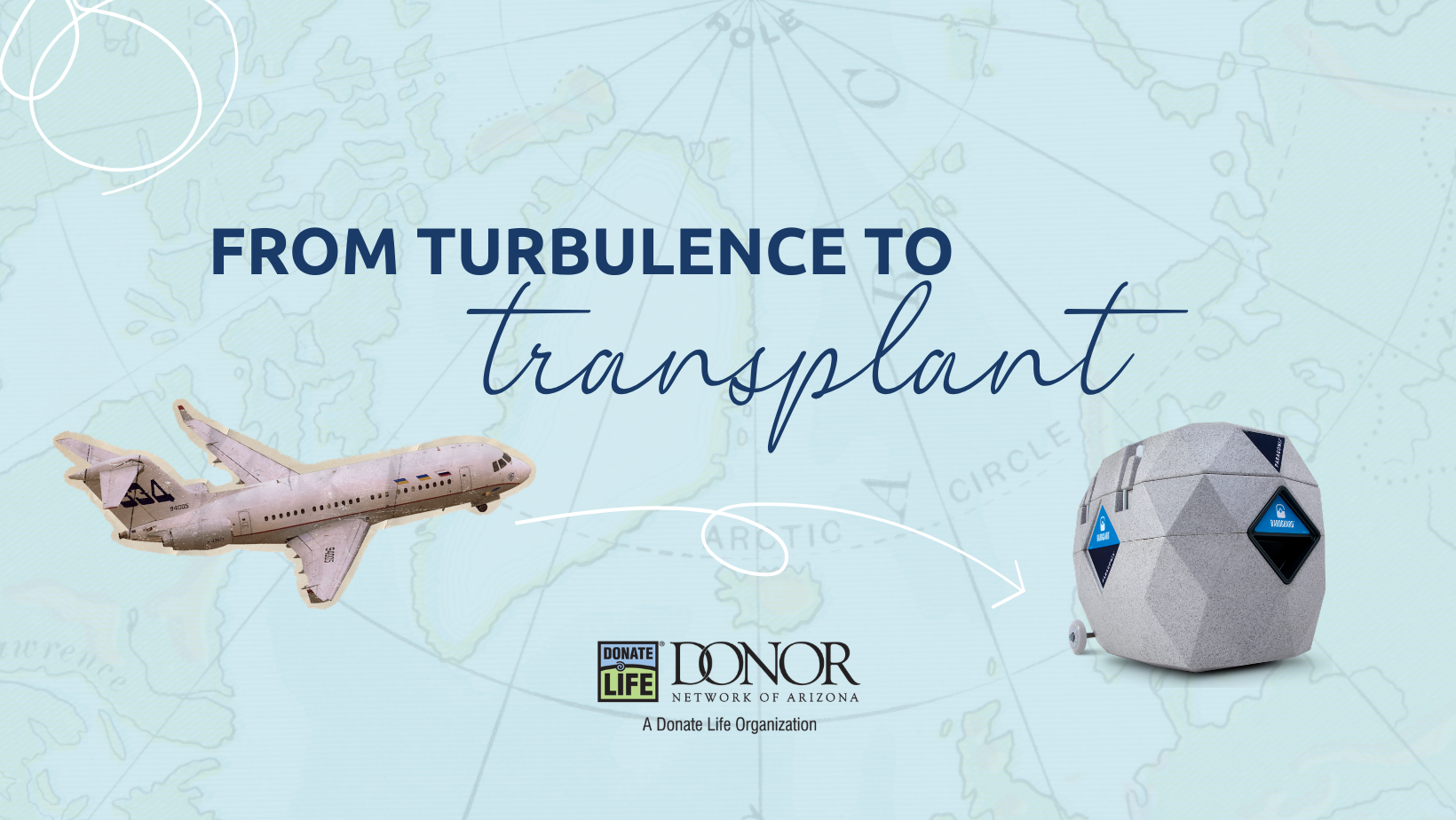
Flying thousands of feet in the air, no one expected a mid-flight crisis. But after a rapid loss of plane cabin pressure and an emergency return to the airport, a pair of donor lungs went through the journey of a lifetime and still saved a life—thanks to new, cutting-edge preservation technology.
When the oxygen masks dropped, everyone on board the May 2, 2024, flight knew something was wrong. Other than the souls on board, the plane had particularly precious cargo that an organ waiting list patient in Texas depended on for a new chance at life.
The Adventure Had Just Begun
On this flight from Phoenix to Dallas, an unexpected mechanical event required the plane—carrying a transplant team along with donated lungs for transplant—to make an emergency landing back in Phoenix, an event that would start a race against the clock to get the lungs back on their way to the waiting recipient.
The aircraft quickly lost air pressure in the cabin, requiring use of oxygen masks while the pilots performed a quick descent to a breathable altitude to then turn back to the airport. Without the cutting-edge Paragonix BAROguard™ organ preservation device, this rapid change in cabin altitude would normally have subjected the alveoli (the air sacs of the lungs) to a condition called barotrauma. That could have impacted their ability to be safely and effectively transplanted.
Preserved for Too Long?
Adding to the complexity, the lungs were without blood flow—known as “ischemic time”—for more than nine hours, well above the national average. Donor lungs preserved by conventional ice storage would be vulnerable to traditional thresholds of acceptable ischemic time. The Paragonix BAROguard™ organ preservation device keeps the temperature range between 4 and 8 degrees Celsius (39 and 46 Fahrenheit)—measurably above freezing temperatures—which has allowed organ transplant surgeons to utilize lungs with longer ischemic times and from longer distances.
After boarding a second plane and trying again, the team helped facilitate the successful transport of those same donor lungs to Baylor University Medical Center.
“This case highlights the mechanisms by which transplant teams can maintain lung allograft airway pressure … as recommended by the International Society of Heart & Lung Transplantation,” says Dr. Gary Schwartz, surgical director of lung transplantation at Baylor. “This starts in the operating room when the donor lungs are [recovered] but historically, we had no control over the gain or loss of pressure during transport”.
New Tech = Even More Lives Saved
BAROguard™ represents the next evolution in Paragonix’s lung preservation technology. The previous LUNGguard™ device focused on maintaining a stable temperature to protect donor lungs from freezing injury, and BAROguard™ builds on that foundation by adding active airway pressure management. In the graph, you can see the exact moment the plane’s cabin depressurized. The Paragonix BAROguard™ device responded immediately, protecting the lungs against dangerously high or low airway pressures, both of which are detrimental.
This constant airway pressure management system is specifically designed to shield donor lungs from the stress of altitude changes during air transport—offering an added layer of protection to improve transplant outcomes.
Despite all the obstacles, these donated lungs still saved the life of a patient on the national organ waiting list. With Paragonix BAROguard™, Donor Network of Arizona (DNA) and our transplant center partners continue to push the boundaries of what’s possible in organ recovery and transplantation—offering hope to patients and honoring every gift of donation with every mile traveled.

“Organ preservation technologies like the BAROguard device really allow us to overcome some very difficult obstacles,” says Nathan Fine, manager of organ utilization at DNA. “This allows our donors to share the gift of life with the people who need it most, even entirely across the country on any given day. Our team is so grateful that the Baylor team landed safely that day, and that our donor’s lungs helped the recipient walk out of the hospital with a second chance at life.”