
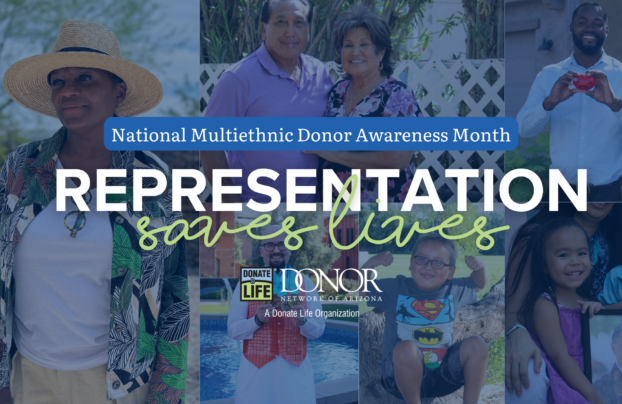
Every August, National Multiethnic Donor Awareness Month (NMDAM) shines a light on the critical need for organ and tissue donors in multicultural communities. Established to help educate the public about health disparities and encourage people to sign us as donors, this observance highlights how donation representation can help save and improve lives while fostering healthier communities.
NMDAM began as National Minority Donor Awareness Week in 1996, founded by the National Minority Organ Tissue Transplant Education Program and Dr. Clive Callender — one of the most influential figures in organ donation and transplantation and among the first Black transplant surgeons in the United States. Since then, it has grown into a nationwide effort led by the National Organ, Eye and Tissue Donation Multicultural Action Group, bringing together organizations dedicated to increasing education and donor registration across diverse populations.
Today, more than 109,000 people (about the seating capacity of the Los Angeles Memorial Coliseum) in the U.S. are waiting for a lifesaving organ transplant. Approximately 60% of those waiting identify as members of a non-White racial or ethnic communities.
Why Representation Matters
People in many racial and ethnic communities, such as African Americans and Indigenous communities, are more likely to develop health conditions such as diabetes, high blood pressure and kidney or heart disease, which can lead to organ failure. Because of this, the need for organ transplants is often greater in these communities.
Donation and transplantation can be cross cultural and be successful regardless of race or ethnicity. However, the chance of longer-term survival may be greater if the donor and recipient are closely matched in terms of their shared genetic background. So, waiting list patients often have a better chance of finding a compatible match when more people from diverse backgrounds register as donors.
Increasing donor registration in every community helps create more opportunities for lifesaving transplants and gives more people hope while they wait.
A Story of Hope
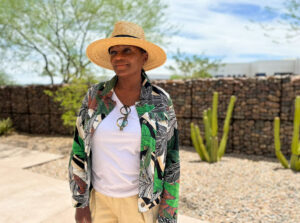 NMDAM isn’t just about raising awareness — it’s about the lives that are changed because someone chose to register as a donor. For transplant recipient Kasaundra Johnson, that decision gave her a second chance at life.
Diagnosed with Type 1 diabetes at just 5 years old, Kasaundra’s health journey eventually led to end-stage renal disease by the age of 30. She spent six years on the national organ waiting list, but throughout it all, she remained hopeful.
“Due to my faith, I did not find the process restricting at all,” Kasaundra said. “I continued to work, travel and inspire as many as I could.”
That hope became reality when she received a lifesaving kidney and pancreas transplant. The gift not only restored her health but also gave her a renewed sense of purpose.
“The gift of life makes me feel ‘chosen’ and purposed in this life to give in any and every way I can, to better someone else’s day, life, family and spirit,” she said.
Inspired by her transplant, Kasaundra went on to earn a master’s degree and become a certified public manager. Today, she shares her story to encourage others to register as organ and tissue donors, knowing firsthand how one selfless decision can transform a life.
“To say that I am grateful does not cover the gesture that was bestowed upon me and my family,” Kasaundra said.
How You Can Make A Difference
NMDAM is an opportunity to start conversations, learn the facts about donation and help build a healthier future for all communities.
You can make a difference by:
- Registering as an organ and tissue donor
- Sharing your decision with your family and loved ones
- Learning about organ donation and helping dispel common misconceptions
- Encouraging others in your community to register and have the conversation
Every registered donor represents hope. While not everyone will become a donor, every person who registers helps build a culture of generosity that can save and heal lives for generations to come.
To register as an organ and tissue donor in Arizona, click here.